

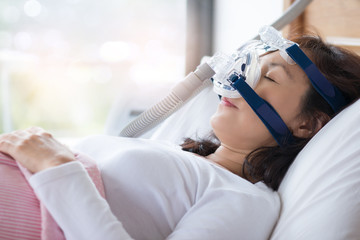
Sleep apnea hits the heart hardest during the day

Disordered sleep might harm the heart more during the day than at night, according to a study published June 10 in the Journal of Arrhythmia.
UW Medicine sleep medicine specialist Dr. Reena Mehra said the findings could help improve the treatment of atrial fibrillation, a heart condition that affects 1 in 20 adults in the United States and can lead to blood clots and increased risk of stroke and heart failure.
People with sleep apnea repeatedly stop breathing for 10 seconds or more when they’re asleep. During these pauses, their oxygen levels drop, carbon dioxide levels rise and blood pressure increases. Their sleep is disrupted as a result.
Over time, sleep apnea increases the risk of heart conditions. People with sleep apnea are two to five times more likely to have an irregular heartbeat. In particular, they are more likely to have an irregular, rapid heart rhythm called atrial fibrillation. Mehra’s team set out to understand the relationship between sleep apnea and atrial fibrillation.
The study is part of a larger Sleep Apnea and Atrial Fibrillation Biomarkers and Electrophysiologic Atrial Triggers (SAFEBEAT) research project. It focused on a cohort of 150 people with atrial fibrillation. Mehra's team used electrocardiography to track heart rate variability, a measure of how the time between heartbeats fluctuates. They tested the patients with atrial fibrillation for sleep apnea and treated those who had it with a continuous positive airway pressure (CPAP) machine.
Mehra's team expected heart rate variability to be more abnormal while people were sleeping, when sleep apnea occurs.

“But what we found is that these measures are altered more during wakefulness,” said Mehra, a professor of medicine and head of the Division of Pulmonary, Critical Care and Sleep Medicine at the University of Washington School of Medicine.
This unexpected result could be because the effects of sleep apnea on the heart build up over the course of the night and don’t peak until daytime. It could also be because people are more active during the day, so the effects are more pronounced then.
These findings could change how doctors diagnose and treat atrial fibrillation. Daytime monitoring might be important for these patients, and medications for atrial fibrillation might work better if they’re timed to be most effective during daytime hours.
After using a CPAP machine, patients’ sleep apnea improved. Overall, heart rate variability became more normal. Thus, treating sleep apnea might be an important component of atrial fibrillation care.
This study was exploratory, and Mehra is now beginning the next stage: a randomized, controlled trial that tests how CPAP affects atrial fibrillation. She is also studying whether biochemical signatures of sleep apnea and atrial fibrillation are detectable in patients’ blood.
The study was supported by a grant from the National Institutes of Health National Heart, Lung and Blood Institute (NCT02576587).