

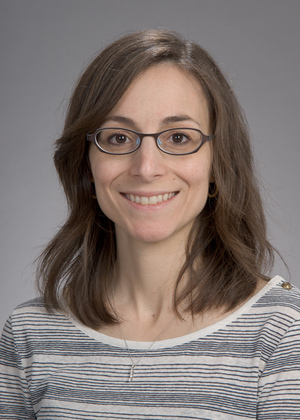
Anne Manicone to present Science in Medicine lecture

Science in Medicine
Wednesday, May 27, 2026
11:00 a.m. – 12:00 p.m.
SLU Orin Smith Auditorium & Zoom Webinar
Dr. Anne Manicone, professor (Pulmonary, Critical Care and Sleep Medicine) will present the Science in Medicine lecture, “From Mice to Men: Translating murine macrophage biology to ARDS therapeutics” on May 27, 11am-12pm.
Since its launch in 1976, the Science in Medicine Lecture Series has recognized the School of Medicine faculty research achievements and provided an opportunity for researchers to explore topics outside of their immediate fields.
Research overview
Acute respiratory distress syndrome (ARDS) is a clinical disease marked by respiratory failure due to disruption of the epithelial and endothelial barrier, flooding of the alveolar compartment with protein-rich fluid and recruitment of neutrophils into the alveolar space.
It affects approximately 200,000 patients annually in the USA and results in about 75,000 deaths, and in select cases, anti-inflammatory approaches have a modest benefit.
Given the limited therapeutic options, there remains an urgent need to understand ARDS pathobiology to develop novel therapeutics to hasten ARDS resolution.
To address this need, my lab focuses on understanding novel determinants of reparative macrophage polarization and their functional roles in ARDS resolution.
Macrophages, particularly reparative ones that express markers of IL-4 polarization, can contribute to ARDS resolution by downregulating inflammatory cytokines/chemokines, upregulating anti-inflammatory cytokines, and clearing debris and apoptotic cells. Reparative macrophages also express growth factors that regulate epithelial cell proliferation.
Clinically, ARDS patients whose alveolar macrophages express markers of IL-4 polarization have higher survival rates, suggesting that strategies to alter macrophage function in vivo may be a viable therapeutic approach.
My lab has identified mitogen-activated protein kinase (MEK) pathways as regulators of a macrophage switch from inflammatory to reparative function. Inhibition of MEK1 and MEK2 isoforms enhances IL-4 polarization, increases efferocytosis, and accelerates acute lung injury (ALI) resolution.
Our studies to identify isoform-specific roles of MEK1 and MEK2 highlight opposing roles for these isoforms in ALI, with myeloid MEK1 being beneficial for ALI resolution, whereas MEK2 sustains ALI.
This talk will review the pathophysiology of ARDS, the role of macrophages in lung injury and resolution, and provide mechanistic insight into how MEK1 and MEK2 regulate a macrophage activation switch to fine-tune lung injury repair pathways.