

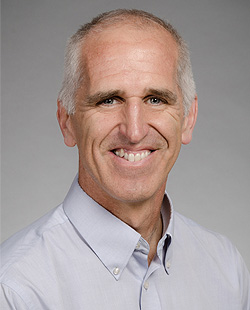
Faculty spotlight: Thomas Hawn

Dr. Thomas Hawn earned both his MD and PhD from Johns Hopkins University before completing his internship, residency, and fellowship in infectious diseases at the University of Washington. During his residency training, he received the prestigious Robert Evans Award, which honors the second-year medicine resident who best exemplifies compassion, warmth, understanding, and a deep commitment to human welfare.
He holds adjunct appointments in the Departments of Global Health and Laboratory Medicine & Pathology, and is currently interim head of the Division of Allergy and Infectious Diseases, a leadership role he previously held in 2017.
"We live in unprecedented times with the ongoing assault on science and universities. After decades of slow progress against the major human infectious diseases, we have recently seen how quickly that progress is reversed."
"The future of UW AID is more important than ever with its role in leading and advocating for the importance of scientific discovery, vaccines, evidence-based policy, and public health guidance and interventions. As we see the constant reminders of the domestic and global importance of ID, we need vigilance, dedication, creativity, and advocacy to prevent adverse consequences of infections."
Research
An internationally recognized physician-scientist, his research focuses on understanding why individuals vary in their susceptibility to infectious diseases and how these differences can be leveraged to develop more effective treatments and vaccines.
His laboratory explores the genetic and immunologic factors that influence host responses to infection, with the goal of translating these discoveries into new strategies for preventing and treating infectious diseases.
He has received continuous and substantial support throughout his career, beginning with prestigious early-career awards such as the Howard Hughes Medical Institute Postdoctoral Physician Award and the NIH K08 Career Development Award, and continuing through multiple competitive grants from the National Institutes of Health and private foundations.
“Tuberculosis remains the leading infectious cause of mortality globally. Progress towards eliminating TB requires a multi-faceted strategy including new discoveries about pathogenesis, development of new vaccines and drugs, and increased funding to deliver optimal care. Our work is focused on understanding how the immune response can be beneficial or detrimental during TB infection and how to shift the balance towards a protective response.”
Hawn has also played a pivotal role in advancing infectious disease research infrastructure and training at the University of Washington. He served as the inaugural director of the UW Tuberculosis Research & Training Center, now known as SEATRAC, helping to establish it as a leading hub for tuberculosis research and education. He continues to contribute to the center’s mission as co-director of its development core.
His scientific achievements have been recognized through numerous honors and awards. Among these is the highly competitive Burroughs Wellcome Fund Clinical Scientist in Translational Research Award, which he held from 2009 to 2015. He has been named a Philip and Helen Fialkow Scholar in recognition of his exceptional promise as a physician-scientist, and elected to the American Society for Clinical Investigation, one of the nation’s most distinguished medical honor societies for physician researchers.
Mentoring
Equally committed to mentoring the next generation of investigators, Hawn has made lasting contributions to research training and career development. He co-chaired the Survival Skills for the Research Years course for more than a decade, providing practical guidance on career development, mentorship, manuscript writing and funding strategies.
His dedication to mentorship was recognized in 2013 with the inaugural Resident Scholarship Mentorship Award, in appreciation of outstanding mentorship and enthusiastic support of resident scholarship.
“Training the next generation of physicians and scientists provides a source of optimism that we can tackle the scientific and political challenges of our times. The creativity, intellectual force, and energy of the next generation is essential for our success.”