

Evidence, excitement: In the moment with a GLP-1 expert

For all that is ailing U.S. healthcare these days, the drugs loosely known as “GLP-1s” have been a klieg light of hope for patients and doctors alike. Hardly a week passes without headlines proclaiming that the drugs, created for diabetes and obesity, appear effective against yet another medical condition.
 Dr. David Cummings, professor of medicine at the University of Washington School of Medicine and endocrinologist with the VA Puget Sound Healthcare System, has spent 35 years studying humans’ appetite, body weight and energy metabolism — the biological systems that GLP-1 drugs are designed to affect.
He is well acquainted with earlier generations of weight-loss drugs, he says, and with semaglutide, tirzepatide and the “even better” iterations of these meds coursing through the FDA’s approval pipeline.
"Even better" drugs for weight-loss are in the FDA's approval pipeline, said Dr. David Cummings, an endocrinologist with the University of Washington School of Medicine.
Cummings discussed the evidence for the medications, which, despite their relative infancy, he has prescribed to more than 1,000 patients. This conversation from March 2026 was edited for clarity and length.
Q: You mentioned in email that you want to reference the drugs’ generic names
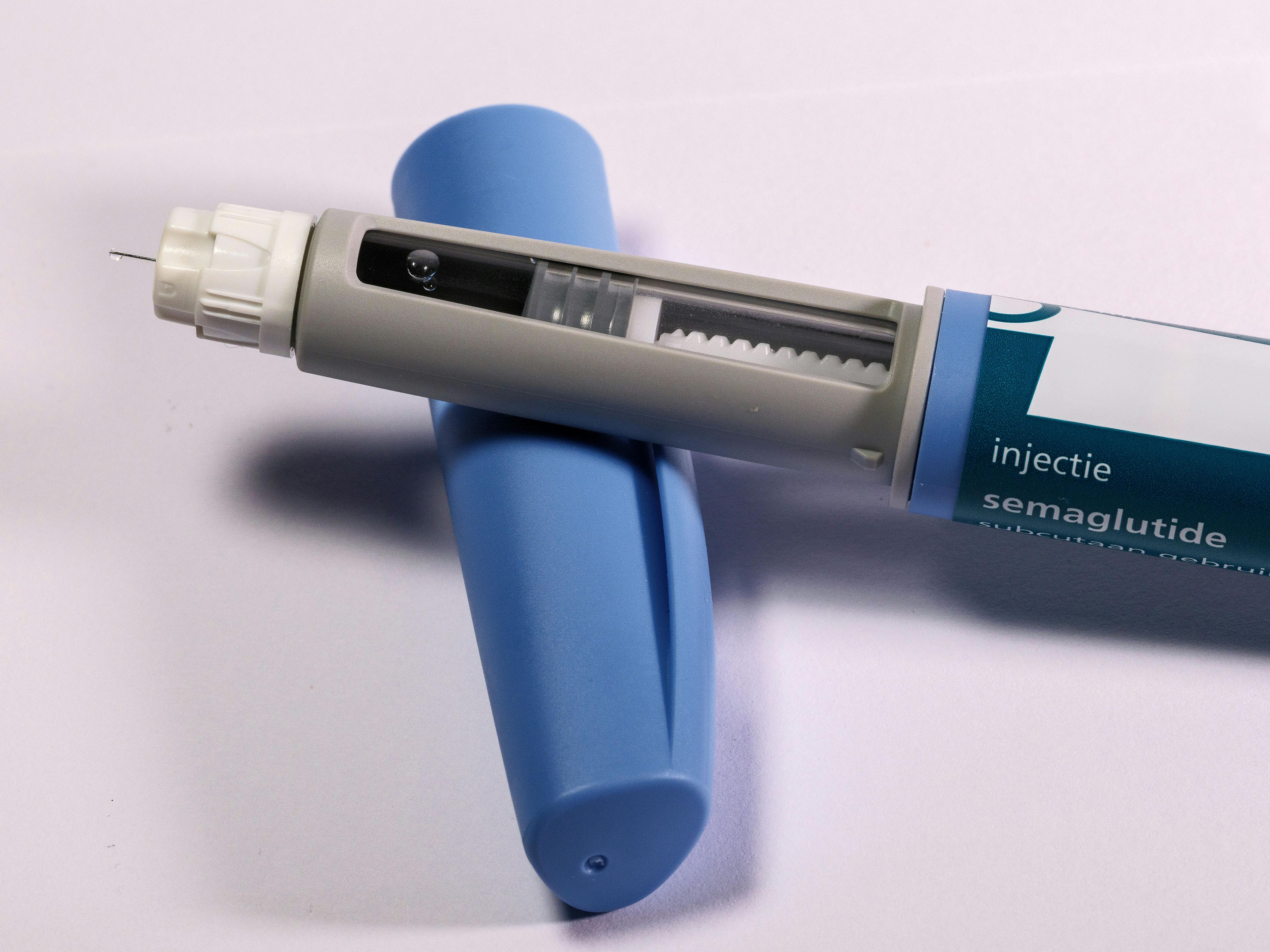
Cummings: Yes. In common parlance, everybody calls them “GLP-1s” because they mimic a natural hormone called GLP-1. The generic terms may be less familiar, but the first really powerful GLP-1 receptor agonist, or stimulant, was semaglutide. People know it by the brand names Ozempic or Wegovy.
The other major one on the market is tirzepatide, known as Zepbound or Mounjaro. Zepbound has a GLP-1 receptor agonist and a GIP stimulant. Generally I refer to both of these drugs as incretin medicines because they work to enhance natural gut hormones called incretins (GLP-1 and GIP).
Q: What are the drugs doing in the body?
Cummings: When you eat, your brain knows you’re full when signals from the stomach being stretched are relayed to your brain. Components in food, once they get to your intestine, cause the release of certain hormones, GLP-1 among them, that contribute to satiety, the feeling of fullness. GLP-1 also stimulates insulin secretion from your pancreas so you can deal with the nutrients you've just absorbed. GIP is another hormone that stimulates insulin secretion.
These drugs replicate these natural hormones. In the brain, they act on the hypothalamus to reduce hunger, and in the hindbrain to increase satiety. They also work also in a part of your brain called the mesolimbic dopaminergic system, which is involved in reward. This is the least well-studied area, but they probably reduce the rewarding features of food and other things.
Q: How do you describe the drugs’ effectiveness against diabetes and obesity?
Cummings: Between semaglutide and tirzepatide, tirzepatide is a little stronger on the usual (clinical trial) endpoints. So, it is better for diabetes, better for lowering body weight. That's been shown for each (drug) compared to placebo, as well as in direct comparisons of one against the other for diabetes control and for weight loss.
So tirzepatide promotes about 22% weight loss (and) semaglutide about 15% weight loss, among people without diabetes. Tirzepatide lowers the hemoglobin A1C, a measure of diabetes, by about 2.3 percentage points and semaglutide by about 1.5. And those statistics apply in randomized trials where they're directly compared head-to-head.
Q: What about the drugs’ effectiveness against other conditions?
Cummings: We have really strong evidence from proper randomized trials that these drugs are terrific at reducing body weight, improving diabetes, reducing cardiovascular events, major adverse kidney events and liver events, clinically significant arthritis, and sleep apnea.
Then we have exciting suggestions from large observational studies indicating that they may reduce a variety of cancers, particularly those related to obesity, as well as alcohol and substance abuse and other compulsive behaviors, suicide, potentially, and maybe even dementia.
Use of alcohol, nicotine, opiates, cocaine, cannabis, psychedelics and methamphetamine have all been shown in observational studies to be less common among people taking these drugs than (among) people not taking them.
Q: Do you have a full clinic schedule of patients who are wildly excited at their prospects for a life change?
Cummings: People are very excited. The last I heard, about 1 in 6 Americans have tried either semaglutide or tirzepatide, so most people have a friend who's been on it and they've heard the anecdotes.
We've had weight-loss drugs for decades. They've just never been very popular because they weren't very good. And they never rocked the boat the way these new ones are doing. I've had a long experience with transforming people's lives by getting them to bariatric surgery, what we call metabolic surgery. Typically, if a person is 300 pounds, they'll drop to 200 pounds. That utterly transforms their lives. So I'm used to that, but we never had that with medicines until now.
Q: What’s the main thing patients ask you about these medications?
Cummings: Do (they) have to stay on the medicines forever, or could they eventually come off the medicine and maintain the benefits?
The most clear data from proper randomized trials shows, no, the drugs don't work if you don't take them. All the benefits that you had while on them will be lost once you come off. That's been shown in clear trials that randomly allocate people to either stay on the drug or go to placebo after they've had some benefit. The placebo people will shoot back up to wherever they started, and the people who stay on the drug maintain the benefits.
The second most common question I get is, what are the side effects? Those are very clear. One of the ways that these medicines make you feel full is they slow your gastrointestinal motility. If that happens a little too far in you, and it's in the upper intestine, that's nausea. If it happens in the lower intestine, that's constipation, the No. 1 and 2 most common side effects.
Internationally, especially in places where people are vegetarian, a big question is whether they have to worry about losing lean body mass when they lose weight. About three-quarters of weight loss is fat mass and one-quarter is lean body mass. But what we find is that, after weight loss, muscles are more efficient at burning calories to generate energy. Even though your mass and volume of muscle may be reduced, your function is increased.
Q: A recent New Yorker article described people who had taken these drugs and reported a side effect of less excitement about life
Cummings: There are a lot of hints that the drugs may act in the reward centers of the brain, and those actions may have something to do with why they seem to be associated with lower alcohol and substance abuse and smoking, and other compulsive behaviors like gambling and shopping. But a potential downside of that is … something called commonly the "Ozempic blahs." And what that is, is like a dulling out of the ups and downs in life, and sort of a lessening of the zest for life, including the zest for things that used to make them happy — like gambling or smoking or drinking or partying. But people describe that their experience of life is just a little flatter.”
Q: Are most of your patients managing the side effects and staying on these drugs?
Cummings: The rate of discontinuation of (either) of the drugs, whichever drug it is, for side effects is less than 5%. Most people tolerate (the drug) or they get it at the high doses but back down a little bit and stay on.
Unfortunately, the actual rate of discontinuation (according to) published literature, at one year among people who start one of these drugs — 63% are already off of it. At two years, 83% are off of it. At three years, 92% are off the medicine. Even though they need to be taken forever and are coded by the FDA as "forever drugs," intended to be taken for life, most people are off of them very soon.
So that tells me that, since it's a very small minority that are coming off for side effects, most people are having them ripped away from them by political and financial reasons.
Q: You mentioned bariatric surgery. Are these drugs destined to replace that?
Cummings: I think bariatric surgery usage will go down for a while as the population tries out these new drugs, because people always want to do nonsurgical techniques first. But what might ultimately play out is getting medicines working in tandem with endoscopy and metabolic surgery to help some people achieve even greater weight loss. It should be tailored to the individual.
Really we need to address the big denominator of people out there getting nothing, no surgical or pharmaceutical help, who have given up trying, who've tried every diet and exercise in the book, and some of the older weight-loss medicines. Having failed enough times, they've just given up and consigned themselves to die heavy.
We all need to be working as a unified team together against a common adversary of obesity because that adversary is winning the war right now.