


A new model of division leadership

Last week I met with Gerontology and Geriatric Medicine faculty to announce new division leadership - Dr. Jose Garcia will serve as interim division head and Dr. Katherine Bennett as the new associate division head for clinical affairs, effective Sept. 16.
This structure represents a new approach to divisional leadership within the department. Currently, each division is supported by a dyad staff and faculty team who are responsible for advancing the division's clinical, education, research, and administrative missions.
Many leading academic Departments of Medicine have adopted a dual faculty leadership model that pairs a division leader with a dedicated clinical leader focused on operational excellence and advancing the clinical mission. Together with the division administrator, this team works collaboratively to advance all missions. I have personally seen this model work extremely well.
After discussions with our division heads, division administrators, and our clinical programs team, we believe this new leadership model will enable the division head to devote more time to strategic leadership, innovation, and our education and research missions, while providing focused leadership and oversight of clinical operations.
Over the next several months, we will begin implementing this approach by appointing associate division heads for clinical affairs across all divisions.
You may be wondering why we are investing so much in the clinical mission, and it is because we want to reach more patients across the WWAMI region while concurrently building long-term financial sustainability for our department and institution.
As an academic department, we are united by a shared commitment to all our missions, and I have found that faculty and staff in academia don't like it when leadership at all levels talk about money or make decisions based on finances. Phrases like “no money, no mission” fall flat and feel dismissive of the values that brought everyone to academic medicine in the first place.
Money is not the mission. The mission is the mission.
One thing I want to make very clear at the outset is the money is NOT the mission. The mission is the mission. The reality, however, is that academic finances have fundamentally changed, and clinical margin is now the key driver of funding that pays for the research and education missions.
The federal funding changes have magnified this even further, and we simply need to start doing things a bit differently to sustain the academic mission that we all hold so dear.
I do genuinely believe that we can make some changes that allow clinical margins to fund wonderful initiatives (and staff!) in education, research, and community engagement as well as putting resources back into the clinical mission to make it easier for us to provide clinical care. This belief, paired with some hope and optimism is, after all, why I chose to come to UW. Clinical margins can also be put into compensation plans so that individual faculty members are eligible for financial incentives.
We will have many more discussions about the clinical mission in the upcoming months, but without further ado, please join me in welcoming Jose and Kate to their new roles! I also want to extend a special thank you to Dr. Wayne McCormick, who has led the division since 2015, for his outstanding contributions to the division and department.
Meet the new Gerontology and Geriatric Medicine leaders

Division Head (interim)
Dr. Jose Garcia is a professor and physician-scientist at the Puget Sound VA Health Care System, where he directs the Clinical Research Unit and the Geriatric Research, Education, and Clinical Center.
His federally funded research program focuses on the role of ghrelin, androgens, and other anabolic pathways in different wasting conditions including sarcopenia of aging and cancer cachexia. He is president of the Cancer Cachexia Society.
His basic laboratory is focused on understanding the molecular underpinnings of muscle wasting, fat atrophy, and anorexia in these settings, and the development of novel targets for these conditions. His group also participates in several human trials in patients with cancer aiming at characterizing the pathways involved, identifying the mechanisms of action of different potential therapies, and testing them in multicenter trials.
He also leads research on the neuroendocrine effects of traumatic brain injury, serving as principal investigator of a 20-site clinical trial evaluating growth hormone replacement in veterans with mild TBI.
Associate Division Head for Clinical Affairs
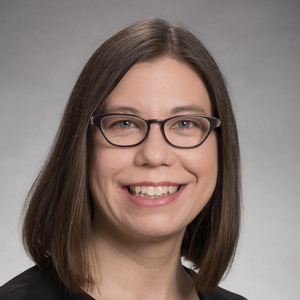
Dr. Katherine Bennett is an associate professor and national leader in geriatrics, focused on advancing Age-Friendly care and strengthening the interprofessional geriatrics workforce.
She provides local and national leadership in Age-Friendly care, serves on Harborview Medical Center’s Medical Executive Board, and cares for older adults across outpatient and inpatient settings.
She has directed the UW Geriatric Medicine Fellowship since 2016 and chairs the American Geriatrics Society’s Geriatric Medicine Fellowship Directors group. She also co-authored the ACGME Milestones for Geriatric Medicine.
As director of education for the Northwest Geriatrics Workforce Enhancement Center and founding medical director of UW Project ECHO-Geriatrics, she has helped expand geriatrics training and expertise nationwide. A recipient of the HRSA Geriatric Academic Career Award, she is a longtime advocate for geriatrics education and workforce development. She serves on the board and is past president of the National Association for Geriatrics Education / National Association for Geriatrics Education Centers.
Gratitude for firefighters
PS: As the pulmonologist in our neighborhood, I tried to cancel our block party this past week because of the smoke, but people came out anyway. The treat of the evening was that a firetruck came out for a house call and then stayed afterwards. I got to personally thank them for their service.
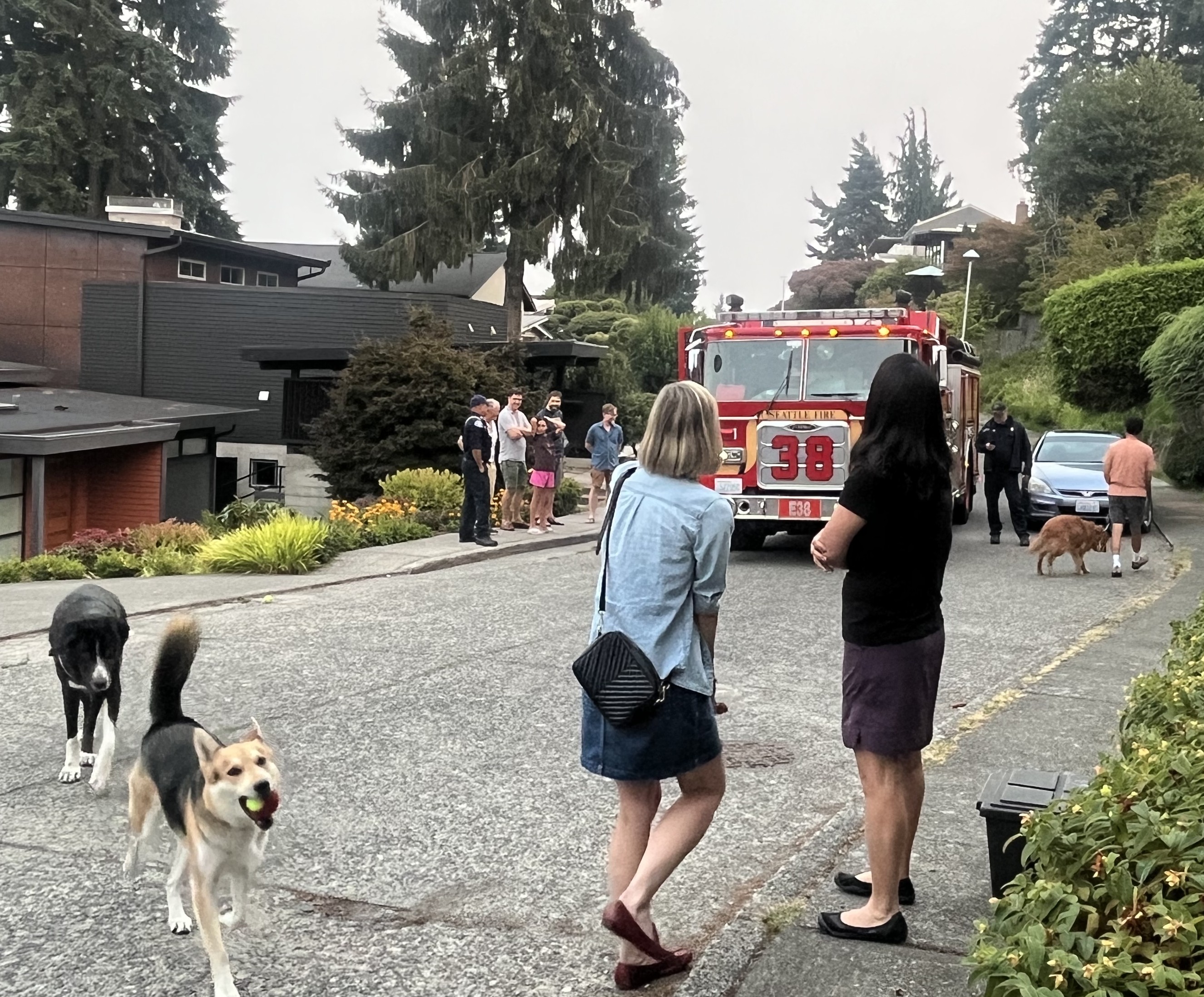 Healthcare workers are heroes, but so are firefighters. Last year when the fires raged in LA, burning down my friends' and colleagues' homes and even one of the UCLA clinics, I fled to the San Diego area for better air for my asthma, only to watch my neighborhood burn (including the house right across the street from us) on national TV.
The heroic firefighters ended up saving almost our entire neighborhood, and I have a very distinct memory of driving into our community for the first time after being evacuated for weeks. The firefighters were still there and I stopped and emotionally saluted each and everyone of them.
We all owe them such a debt of gratitude. I imagine many of you have friends/family in Spokane and I'm thinking of you and sending my gratitude and positive vibes to the fire teams who work to protect us.